
Why Modern Businesses Need a Smarter POS System
From Simple Billing to Complete Business Management
A Point of Sale system was once considered nothing more than a digital cash register.
Today, that definition has completely changed.
Modern businesses need much more than billing. They need to understand their customers, manage inventory, monitor employees, track purchases, analyze sales, manage finances, and make fast business decisions.
This has transformed the modern Point of Sale (POS) system into a powerful business-management platform.
What Is a Modern POS System?
A modern POS solution connects the different parts of a business through a centralized digital platform.
Depending on the business, a POS system can manage:
- Sales
- Billing
- Inventory
- Purchasing
- Customers
- Suppliers
- Payments
- Accounting
- Employees
- Branches
- Products
- Reports
- Business analytics
Instead of maintaining separate systems, businesses can manage essential operations from one platform.
Introducing sPOS
sPOS is a smart Point of Sale and business management solution designed to help businesses simplify their daily operations.
It combines POS functionality with broader business-management capabilities, making it suitable for retailers, restaurants, supermarkets, pharmacies, and other businesses requiring structured sales and inventory management.
1. Faster Sales & Billing
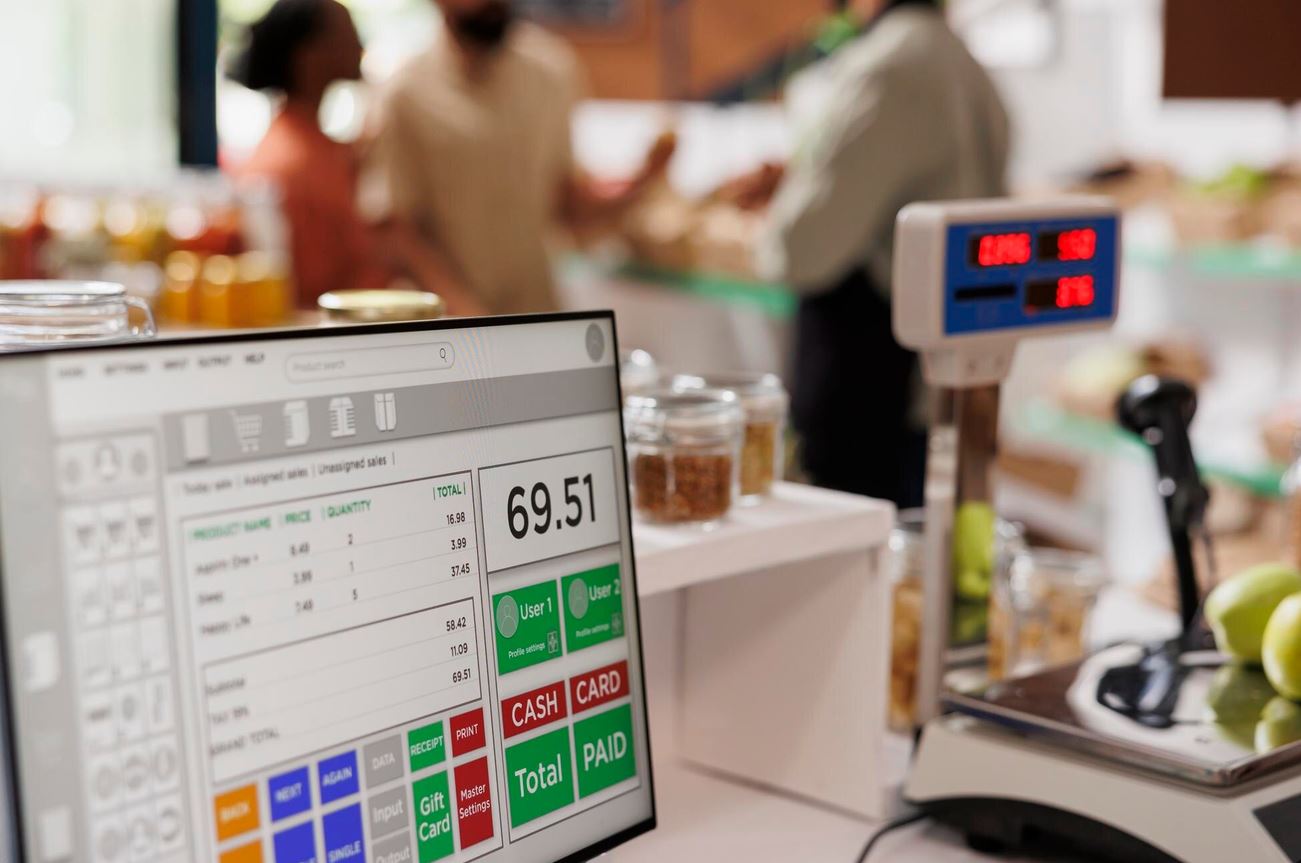
A good POS system should make checkout simple and efficient.
sPOS can help businesses manage:
- Product selection
- Barcode-based sales
- Discounts
- Payments
- Invoices
- Returns
- Transaction history
A faster checkout experience can improve both employee productivity and customer satisfaction.
2. Real-Time Inventory Management
Inventory problems can directly affect profitability.
Too much inventory ties up capital, while insufficient stock can lead to missed sales.
A modern POS system helps businesses maintain visibility over:
Opening Stock → Purchases → Sales → Transfers → Adjustments → Closing Stock
Management can therefore make more informed purchasing decisions.
3. Purchase & Supplier Management
Businesses need to know where their products come from and how much they are spending.
A POS platform can help maintain:
- Supplier records
- Purchase orders
- Purchase invoices
- Product costs
- Supplier balances
- Purchase history
This creates better control over procurement.
4. Customer Management
Modern retail is increasingly customer-centric.
Businesses can maintain customer information and purchase history to better understand customer behavior and create more personalized experiences.
Customer data can also support:
- Loyalty programs
- Customer segmentation
- Credit management
- Purchase analysis
- Promotional campaigns
5. Accounting & Financial Visibility
Sales data becomes significantly more valuable when it connects with financial information.
A modern business platform can help management monitor:
- Revenue
- Expenses
- Receivables
- Payables
- Cash flow
- Sales performance
- Profitability
This reduces dependence on disconnected spreadsheets and manual calculations.
6. Multi-Branch Management
Growing businesses often expand from one location to multiple outlets.
Managing each branch independently can make reporting and control difficult.
A centralized POS platform can provide management with a broader view of:
- Branch sales
- Inventory
- Purchases
- Staff activity
- Financial performance
- Product movement
This enables management to compare branches and identify opportunities for improvement.
7. Reports & Business Intelligence
Data without analysis has limited value.
Modern POS systems can convert daily transactions into useful business insights.
Management can analyze:
- Best-selling products
- Slow-moving products
- Daily sales
- Monthly sales
- Customer purchases
- Inventory movement
- Branch performance
- Employee performance
These insights can support faster and better decision-making.
Technology Is Changing Retail
The modern customer expects businesses to be:
Fast. Convenient. Accurate. Connected.
A traditional billing system cannot always meet these expectations.
Businesses need platforms that connect sales, inventory, customers, finance, and operations.
That is why modern POS technology is becoming a central part of digital business transformation.
Choosing the Right POS Platform
Before selecting a POS system, businesses should consider:
Scalability
Can the system grow with the business?
Security
Are business and customer data properly protected?
Usability
Can employees learn and use the system easily?
Integration
Can it connect with existing business tools?
Reporting
Does it provide meaningful business insights?
Support
Is reliable technical support available when needed?
Customization
Can the platform adapt to specific business requirements?
The Future of POS
The future of POS is not simply about processing transactions.
It is about creating a connected business ecosystem.
The next generation of POS platforms will increasingly combine:
POS + Inventory + Accounting + CRM + Analytics + Automation + Cloud + AI
Businesses that embrace these technologies can create more efficient operations and deliver better customer experiences.
Sell Smarter. Manage Better. Grow Faster.
With sPOS, Softalogy aims to help businesses move beyond traditional billing and toward smarter, connected business management.
Softalogy — Building Software That Powers Business Growth.